




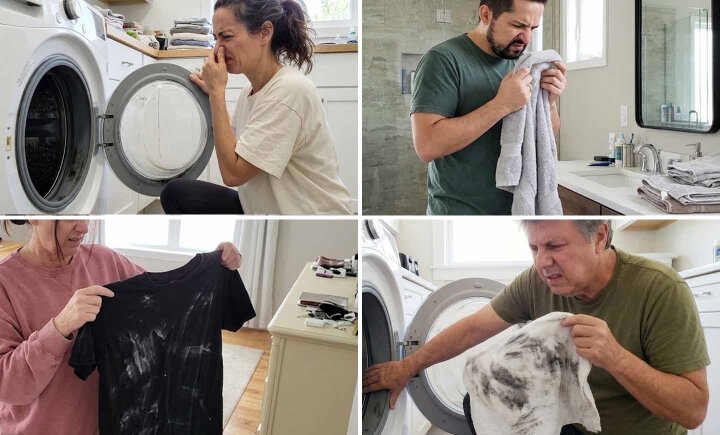
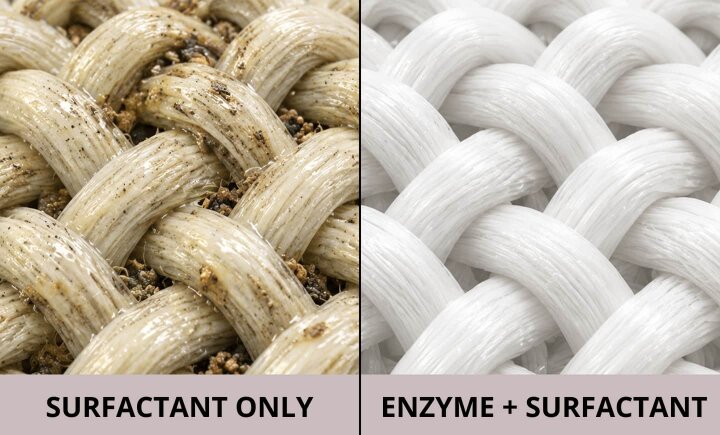
It was the smell that told him something was wrong. Sour, swampy, a little like a basement after a flood. The laundry room itself was spotless. The front-loader was four years old and looked new. Dave Reiner kneels down, opens the door and peels back the rubber seal. Packed into the fold is a gray-black paste, slick and thick enough to scoop out with a finger. Then he pulls out the detergent drawer. Behind it, the walls of the dispenser are coated in the same slimy film. “The owner told me they wash on the normal cycle, use a well-known detergent brand, and run the machine with the door open to dry,” he says. “They do everything right. And this is what I find in almost every house I walk into.” Reiner has repaired washing machines for 22 years and estimates he has opened more than 9,000 of them. Most of his calls start with the same complaint. Not that the machine is broken. That it smells. ❌ A musty smell every time you open the door ❌ Black spots on the rubber seal that come back after you wipe them ❌ Towels that smell sour as soon as they get damp ❌ Clothes that feel stiff or waxy straight out of the dryer ❌ White streaks on dark clothes “People think the smell means their machine is dirty,” he says. “Really it means their detergent is staying behind.” Every 30 washes If a washing machine is built to clean, why is it so often the dirtiest thing in the house? “Customers always ask me what they did wrong,” Reiner says. “Usually it’s nothing unusual. It’s what they’re putting in the drawer.” The liquid detergent The extra capful The fabric softener He has also seen it with pods on short, cold cycles, and with scent boosters that add one more layer to the mix. “Cleaning the machine helps,” he says. “But if the detergent keeps leaving something behind, you’re just resetting the clock.” Leftover detergent is only the start. It acts like glue for everything else that comes off your clothes: body oils, sweat, skin cells and lint. Kept warm and damp in the seal and under the drum, that mix becomes food for bacteria. One of the main ones researchers have linked to musty laundry smell is Moraxella osloensis (Kubota et al., Applied and Environmental Microbiology, 2012). And here is the part most people never think about. The same film that builds up on the drum also builds up on the fabric inside it. Your towels, your sheets, your gym clothes. “If it’s sticking to stainless steel,” he says, “it’s definitely sticking to cotton.” “Can’t I just run a cleaning cycle with bleach or vinegar?” “Should I just wash everything on hot?” After years of cleaning the same sludge out of the same seals, Reiner started asking a different question: what if the detergent simply didn’t leave anything behind? That led him to enzyme-based laundry sheets. Instead of relying only on surfactants that need lots of water to rinse away, they use an enzyme called protease to break down the proteins and oils that cling to fabric. The sheet is designed to dissolve completely. He was careful. Not all laundry sheets are the same. Some he looked at were only surfactant pressed into a thin sheet, with no enzymes at all. Same formula, different shape. “The format is the easy part,” he says. “What matters is whether there’s anything left in the drum afterwards.” PlanetWash Laundry Detergent Eco Sheets. You drop one sheet in the drum, not the drawer, and run the wash. Nothing to measure, so nothing to overdose. Reiner’s advice: run one hot drum-cleaning cycle to clear the existing buildup, wipe out the seal and the drawer, then switch. “That way you’re starting from zero and staying there.” “When there’s nothing left behind in the drum, there’s nothing for the smell to come back on,” he says. “That’s the whole idea.” No measuring, no jugs. Each pack holds 60 loads in a slim cardboard box, and there is a fragrance-free option. The formula uses plant-based enzymes, including protease, to break down the body oils, sweat and protein soils that build up in fabric. The sheet is designed to dissolve completely at any wash temperature, so there is nothing left behind to coat the drum or the fibers. The formula contains no 1,4-dioxane, no phthalates, no parabens, no optical brighteners and no synthetic dyes. Buildup is not just unpleasant. Left long enough, it ends in a service call. A regular pack of PlanetWash costs $0.25 per wash. Bundle pricing on their website brings it down further. Use them for 30 days. If you don’t notice cleaner, fresher laundry, you get every cent back. PlanetWash ships with a fast delivery guarantee, and customer support responds within 24 hours at [email protected]. Before you close this tab, remember why you opened it. ❌ The smell when you open the washer door ❌ The black spots on the rubber seal ❌ The towels you have to wash twice ❌ The repair bill you’re hoping to avoid One change. What goes in the drum. Everything else follows. Most households already spend more on fixing the problem than on the product that prevents it. Cleaning tablets, softener, scent boosters, and eventually a technician. The fix costs less per load than the detergent you’re using now. PlanetWash currently offers special bundle pricing, bringing the cost down to as low as $0.17 per sheet, with free shipping. One sheet washes a full load. The bigger the bundle, the bigger the saving, so most households stock up for several months at a time. If it doesn’t work for you, send it back. They give you 30 days, no questions asked. Pricing note: The bundle discount is available on the official PlanetWash website. Prices on this page were checked on October 22, 2026 and may change.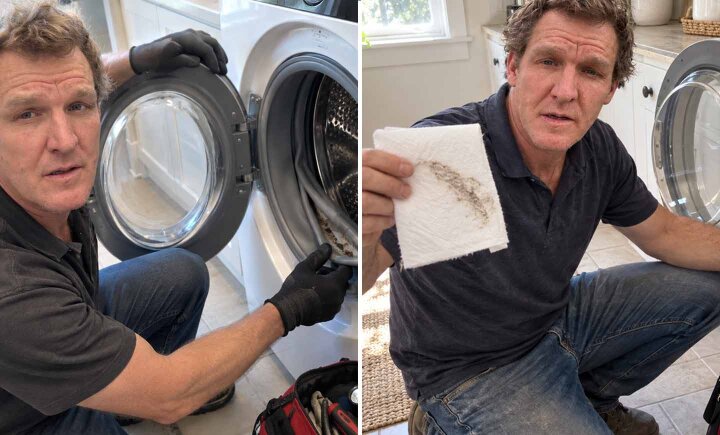
How often many washer manufacturers recommend running a drum-cleaning cycle in their owner’s manuals.
ℹ️ When did you last run one? Most people never look. Meanwhile, every load adds a thin layer to whatever is already there.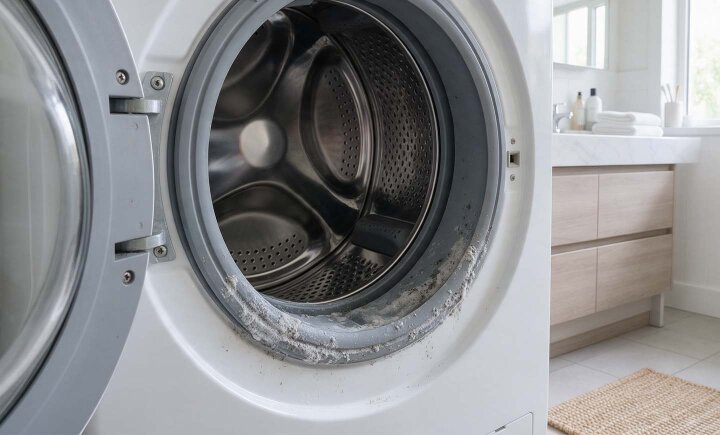
Where the Sludge Actually Comes From
Most liquid detergents are designed for a range of temperatures, but at the cool, quick cycles most people use, not all of it rinses away. What is left clings to the drum, the seal and the hoses. Add one load at a time, and it builds up for years.
The fill lines on a detergent cap are hard to read and easy to overshoot. Many people pour to the top “to be safe.” Modern high-efficiency machines use far less water than older ones, so extra detergent has nowhere to go.
Softener works by leaving a coating on fabric. It leaves the same waxy coating on the inside of your machine. That coating traps lint, skin cells and everything else that comes off your clothes.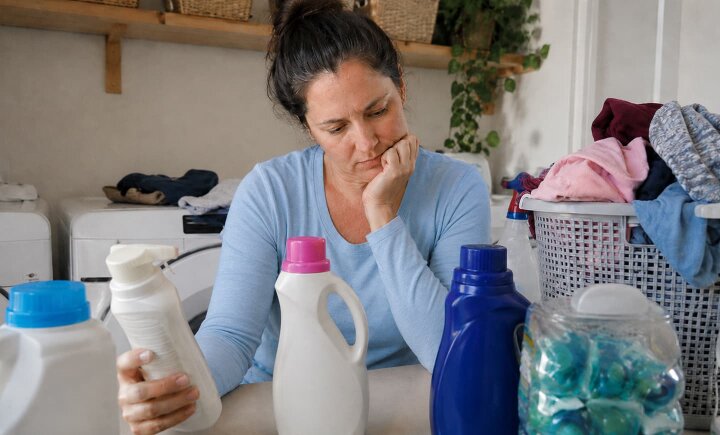
What That Gray Sludge Is Made Of
It helps, and he recommends it. But it only removes what is already there. If your detergent keeps leaving residue, the buildup starts again with the very next load. You have to change what goes in, not just clean up afterwards.
Hot water helps dissolve detergent, but it costs more to run and many clothing labels say to wash at 86–104°F (30–40°C). A detergent that dissolves fully at any temperature solves the problem without changing your habits.What He Tells Customers Now
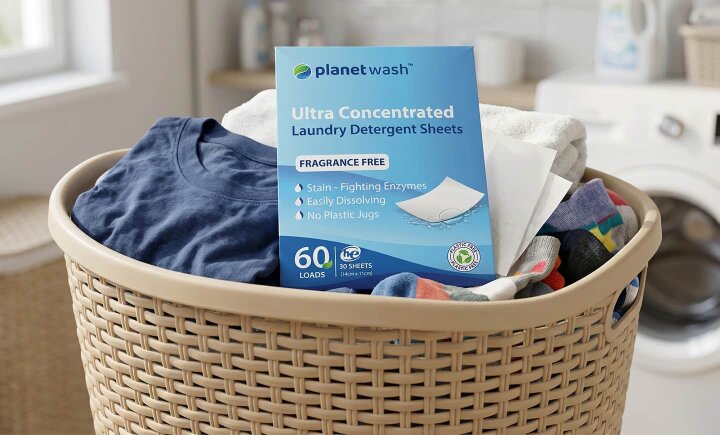
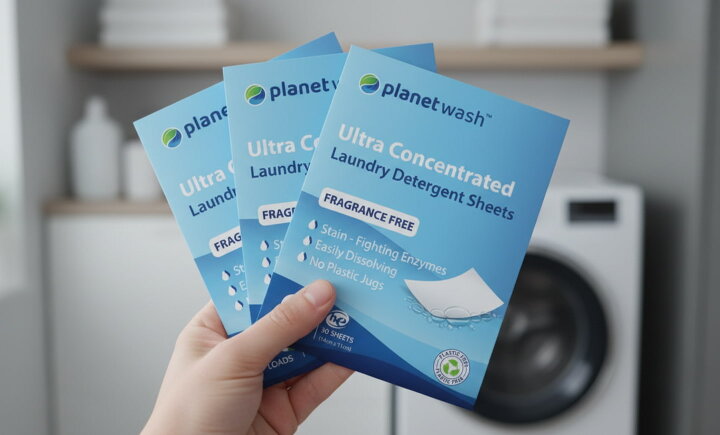
The One He Recommends: PlanetWash
What a Smelly Washer Ends Up Costing
What It Costs Cost Fixes the Cause? Repair technician call-out $100 to $200 Diagnoses the problem only Door seal (boot) replacement, installed $200 to $400 Replaces the damage, not the cause Washer cleaning tablets (12 months) $40 to $60 Removes buildup after it forms Fabric softener (12 months) $40 to $80 Adds to the buildup PlanetWash Eco Sheets $0.17/wash ✓ Designed to dissolve completely $0.25/wash
From $0.17/wash
Bundle pricing offers greater value. Free shipping in the US. One sheet per load.How Much Does It Cost?
Customer Ratings
Average based on 9,803 reviews
 Excellent


Three months in and I am genuinely impressed. Shirts come out cleaner and the small rash on my collarbone is gone seemingly for good!!!!!